News
Food labeling regulations are changing . In the near future, Food companies won't be able to state their products are Australian made, if they are not.
Under the new regulations, all companies must have a statement on its label informing the country of origin of its ingredients. The characters must be not less than 9 mm
New Food Labeling
The following 4 articles are brief notes regarding the proposed food labeling changes.
Proposed Food Labeling Changes to be addressed on 28th of October at the Australia New Zealand Food Regulation Ministerial Council (ANZFRMC) meeting developed by Food Standards Australia New Zealand (FSANZ)
Compulsory, all unpacked products (pork, seafood, fruit and vegies) to be labeled (min 9mm) with country of origin not statement
Statement of origin on packed goods not company address
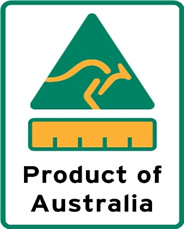
Comply with trade practices act re: Made in..or Product of.
If approved at meeting should be law by as early as November 2005
Media release
McGauran calls on States to back country of origin labeling
Stronger 'country-of-origin' food labeling requirements to be considered later this month will significantly benefit Australian producers and consumers alike.
Agriculture, Fisheries and Forestry Minister Peter McGauran welcomed the proposed standard - developed by Food Standards Australia New Zealand (FSANZ) - which will make it compulsory for the specific country-of-origin to be included on all unpackaged products covered by the standard, and a distinct statement of origin on packaged goods.
"This is a significant step in achieving accurate and informative country-of-origin-labeling for Australian producers and consumers. The changes will help inform consumers who want to support local producers, and buy Australian-grown products," Mr McGauran said.
The new standard includes:
- broadening the scope to include unpackaged pork and pork products, and processed unpackaged seafood, vegetables and fruit.
- a requirement that unpackaged product included in the standard have a specific country-of-origin label - not just a statement that the product is imported; and
- distinct statement of origin information on packaged products - not just the address of a manufacturer or importer.
Mr McGauran said the proposed standard would be considered at the Australia New Zealand Food Regulation Ministerial Council (ANZFRMC) meeting on 28 October.
"It's vital that the Ministers give it their full endorsement," he said. "Any delay in providing accurate and meaningful country-of-origin labelling information is unacceptable - for consumers, for industry and for the wider Australian community."
While endorsing the proposed standard, Mr McGauran acknowledged that there were further issues to be addressed, as raised by AUSVEG and the Fair Dinkum Food Campaign on behalf of Australian vegetable growers.
"I recognise industry concerns regarding the definition of 'Made in Australia ' and 'Product of Australia'. However, these are provisions under the Trade Practices Act, overseen by the Australian Competition and Consumer Commission (ACCC), and are not able to be reviewed by FSANZ or ANZFRMC.
"Once the stronger standard is accepted at the ANZFRMC meeting, it is a basis to move forward and tackle other issues surrounding the labelling of processed and packaged vegetables.
"Needless to say, labelling is a complex issue. Composite products such as blended goods and sauces may include multiple ingredients from several countries which vary on a seasonal basis.
"To continually update and amend labels to reflect the country of origin of each and every ingredient is impractical and costly for processors, many of which are small and medium businesses in rural Australia .
"We have made significant progress in getting this far, and we will continue to work in the best interests of Australian farmers," Mr McGauran concluded.
Country of Origin Labelling
Food Standards Australia New Zealand (FSANZ) has now made recommendations to the Food Regulation Ministerial Council on country of origin labelling. We are recommending a package of measures to strengthen country of origin requirements in the Australia New Zealand Food Standards Code .
The proposed measures give appropriate weight to informing consumers, exploring means for timely implementation, improving enforcement action and raising awareness, generally, through education and information campaigns.
Summary of key recommendations
Packaged foods
1. the country where the food was produced or made or manufactured or packaged must be identified on the label*;
2. subject to qualified claims for foods with multiple ingredients (see point 3 below) the actual country must be stated on the label, rather than relying on a statement that the product is imported*;
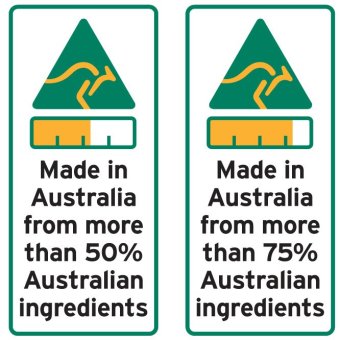
3. a range of statements is allowed, consistent with those allowed under trade practices law - for example, 'made in.', 'product of.' or a qualified claim such as 'made in country X from local and imported ingredients';
4. the terms 'made in.' and 'product of.' must comply with trade practices legislation.
5. the recommended standard does not go as far as declaring the country of origin of ingredients for mixed foods*;
Unpackaged foods
6. requirements as for packaged foods, but applying to unpackaged and processed fruit, vegetables, seafood, pork and nuts;
7. the application to pork is new to the Food Standards Code and has been included at the request of the pork industry and consumers;
8. unpackaged foods will be required to have the country of origin stated on a label - eg a sticker on an orange - or have a sign adjacent to the product;
9. the print size on the signs must be at least 9mm and the information should be set out legibly and prominently (eg in contrasting colours).
Benefits of the proposed requirements
The major benefit of the recommended country of origin arrangements will be to provide consumers with clear and unambiguous information on the source of a food product, both packaged and unpackaged. Other benefits include:
unpackaged foods will now be treated in a like manner, whether locally produced or imported - addressing a present inconsistency, and potential breach of Australia 's World Trade Organization (WTO) obligations, in the Food Standards Code;
the proposed requirements bring unpackaged foods into line with general labelling provisions in the Code;
consistency with trade practices legislation.
Likely introduction of the new arrangements
Food ministers are expected to consider FSANZ's recommendations in late October 2005. If the ministers do not seek a review, the new country of origin standard could become law as early as November 2005.
The food industry will then have a phase-in period, during which businesses will have to prepare and apply food labels and signage that comply with the new requirements:
Unpackaged fish, fruit, vegetables and nuts and packaged fresh produce |
- within 6 months of the standard becoming law |
Unpackaged pork products |
- within 12 months |
Other packaged foods |
- within 2 years (with an additional 12 months for existing stocks) |
Further information
Details of FSANZ's consultation process and the reports prepared in response to these consultations can be obtained from the FSANZ website at www.foodstandards.gov.au .
FSANZ and the Australian Competition and Consumer Commission (ACCC) intend to prepare a user guide to explain the relationship between trade practices and fair trading laws and the Food Standards Code.
FSANZ will also facilitate a consumer awareness program - for example, provision of country of origin information in the supermarkets.
* These points have been clarified on 7 October 2005 to assist understanding of the new country of origin labelling recommendations.
October 2005
Parliament of Australia
Department of Parliamentary Service
Parliamentary Library RESEARCH NOTE
Information, analysis and advice for the Parliament 5 September 2005, no. 8, 2005-06, ISSN 1449-8456
Country of origin labelling: Are consumers willing to pay more for Australian products? Draft food labelling rules were released by Food Standards Australia New Zealand (FSANZ) on 12 August 2005 amid calls for mandatory country of origin labelling (CoOL). 1 The role of labels in marketing origin-based agricultural products is becoming increasingly important as the major food retailers and food outlets look to foreign suppliers. This Research Note examines the evidence for consumers buying Australian products, the proposed changes to food labelling, and mandatory CoOL in the United States (US). Food retailing sector Food retailing is worth $80 billion annually and accounts for 40 per cent of retail trade in Australia . Food Retailing Turnover, 2004 - 05 Category Annual Turnover ($b) Per cent of Total Supermarkets & grocery stores 57.28 71.3 Takeaway food 8.89 11.0 Other food retailing 14.20 17.7 Total food 80.37 100 Source : ABS, Retail Trade Cat. No. 8501.0 , 2 August 2005. Supermarkets and grocery stores account for the largest share of food retailing, with the two largest food retailers having a combined market share of 70-74 per cent. 2 While the major food retailers have continued to expand their products and services into new areas, such as banking facilities, magazines, petrol retailing and pharmacies, the proportion of the average household's spending on food has declined. In 1980-81, 13.9 per cent of total household final consumption expenditure was spent on food, but by 2003-04 its share had fallen to 10.3 per cent. 3 Various factors have contributed to this fall, including changes in population demographics, household sizes and lifestyle. Supermarkets Supermarkets are a major channel of distribution through which primary producers sell their products. Fresh food is purchased directly from producers (around 40-50 per cent) and from agents in established distribution centres, mainly produce markets and saleyards. 4 In the case of independent supermarkets, grocery stores and the smaller food retailers, fresh food is purchased from independent wholesalers. Food imports The overwhelming share of fresh food and grocery shelf merchandise sold in supermarkets is Australian grown or Australian made. Moreover, fresh food accounts for 20- 25 per cent of total supermarket sales 5 and the volume of imported fresh food sold in supermarkets is low, less than 5 per cent of fresh food sales for the largest food retailer. 6 Australian imports of food in 2003-04 were $5.88 billion and $4.62 billion in 1999-00. 7 As a share of retail demand, food imports are relatively small, averaging 7.5 per cent of total food demand over the five years to 2003-04. Processed seafood and processed fruit and vegetables are the two largest categories of food imports (16 per cent and 15 per cent respectively). Fresh food imports make up only 5.3 cent of total food imports. 8 New Zealand is by far the largest supplier of Australia's food imports and has increased its share of total imports from 15.2 per cent in 1999-00 to 18.4 per cent in 2003-04. Almost half of the food imports comprise dairy products (18 per cent), processed fruit and vegetables (13 per cent), and processed seafood (12 per cent). Fresh food imports totalled $101 million in 2003-04, or 10 per cent of total food imports from New Zealand. 9 Does labelling matter? Unlike in the US , very little empirical research has been done in Australia on the consumer response to CoOL and food labelling generally. The Australian Made Campaign occasionally commissions surveys on consumer attitudes to country of origin issues and the Australian Made logo. Its most recent consumer survey was completed in 2003. The survey, based on consumers' response to a set of four questions, showed that 45 per cent of surveyed consumers buy Australian made products whenever possible and that 1 in 3 of those surveyed specifically look for the 'Made in Australia' label. 10 The survey also found that 'Product of Australia' labelling has greater recognition and acceptance by consumers than 'Made in Australia': The Campaign's research findings are that almost 8 in 10 (79%) respondents correctly believed that the terms 'Made in Australia' and 'Product of Australia' have different meanings. Consumers generally understand 'Product of Australia' to be the higher claim, though this understanding is significantly lower amongst younger people than older people. Made in Australia/Product of Australia Country of origin labelling of food is governed by the Australia New Zealand Food Standards Code (the Code) and the Trade Practices Amendment (Country of Origin Representations) Act 1998 (TPA).
The Code and TPA are not prescriptive but give producers a clear basis for making CoOL claims. For a food product to be labelled 'Made in Australia ', it must be substantially transformed in Australia and have at least 50 per cent local content. For a product to carry the 'Product of Australia' label, a producer must be able to show that Australia was the country of origin of each significant ingredient and all, or virtually all, processing occurred in Australia . 'Product of Australia ' labelling alone guarantees that the product is wholly or substantially Australian and more often would apply to fresh food and food products processed locally.
Proposed food labelling changes to the Code The draft food standard announced recently by FSANZ will bring greater consistency between the Code and the TPA as regards CoOL. Specifically, the new standard will require country of origin labelling on all packaged foods, as well as the labelling of unpackaged fruits, vegetables, seafood and nuts. If the standard is approved, Australian and New Zealand producers will have 6 months to make the CoOL changes. For all other packaged food, a two-year phase-in period will apply. US country of origin labelling In the US, the 2002 Farm Act made CoOL mandatory for seafood from September 2004 and for beef, lamb, pork, fresh and frozen fruits and vegetables, and peanuts from September 2006, although currently there are moves to make CoOL voluntary. 11 The introduction of CoOL is meant to provide US-origin products with a competitive advantage over imported food by offering consumers a clear choice between home-grown and foreign products. It is estimated that purchases of food covered by CoOL would have to increase by between 1-5 per cent for benefits to cover CoOL costs, but this increase in purchases is not anticipated. 12 While the net benefits of mandatory CoOL have proved difficult to quantify and are probably minimal, several studies have looked at consumers' willingness-to-pay for CoOL. The table following is a summary of these studies and the premium consumers will pay for US products. 13 The only firm conclusion one can draw from the studies is that US consumers will pay a range of premiums if they perceive that a product's origin is integral to its quality. Consumer Willingness-to-Pay Food Location Premium Summary Steak Hamburger Colorado 38% ($1.53/lb) 58% ($0.70/lb) Consumers were willing to pay $184 per year for CoOL and a premium for US Certified Steak and US Certified Hamburger. (Loureiro and Umberger) Steak Hamburger Chicago / Denver 11% ($0.42/lb) 24% ($0.36/lb) Consumers cited food safety concerns, CoOL information and a desire to support producers as reasons for buying US beef. (Umberger et al) Implications for Australia of US CoOL Australia 's principal export to the US is beef (worth $1.5 billion annually). Manufacturing grade beef or lean beef accounts for approximately 75 per cent of beef exports to the US and is used for hamburger patty manufacturing. Although the food service industry is exempt from CoOL, mandatory labelling or voluntary labelling by exporters may discourage manufacturers and retailers from using imported product for ground beef at the food retail level. The US is Australia 's largest market for lamb. Exports to the US are worth around $320 million annually. Chilled lamb makes up the majority of exports (70 per cent) and is distributed through the retail sector. But as most exporters already individually label their lamb cuts with the country of origin, mandatory CoOL will have little impact. 1. ' FSANZ seeks community views on strengthened Country of Origin Labelling Rules ', Media Release , Food Standards Australia New Zealand, 12 August 2005. 2. IBIS World Industry Report, Supermarkets and Other Grocery Stores in Australia , 6 April 2005, p. 29. 3. ibid., p. 26. 4. See Submission by Woolworths Ltd , Trade Practices Act Review, August 2002. 5. IBIS World Industry Report, Supermarkets and Other Grocery Stores in Australia , 6 April 2005, p. 35. 6. Submission by Woolworths Ltd , Trade Practices Act Review, August 2002, p. 8. 7. Australian Food Statistics 2004 , Table 6.1. 8. ibid. The value of fresh food imports in 2003-04 was $315 million. 9. Value of Food Imports from New Zealand Department of Agriculture, Fisheries and Forestry. 10. Australian Made Campaign Ltd , Submission to the Productivity Commission, October 2003. 11. The Food Promotion Act 2005 which is currently before Congress will replace the mandatory law with a voluntary labelling program. 12. For an economic analysis of CoOL, see Mandatory Country of Origin Labelling of Beef, Lamb, Pork, Perishable Agricultural Commodities, and Peanuts ; Proposed Rule , USDA, October 2003. 13. See Umberger, W.J., Feuz, D.M., Calkins, C.R. and Sitz, B.M., 'Country-of-Origin Labeling of Beef Products: U.S. Consumers' Perceptions', Journal of Food Distribution Research 34(3): 77-82, November 2003. The article outlines the studies by Loureiro and Umberger in 2003, and Umberger et al. Michael PriestleyEconomics, Commerce and Industrial Relations SectionInformation and Research Service Except to the extent of the uses permitted under the Copyright Act 1968, no part of this publication may be reproduced or transmitted in any form or by any means including information storage and retrieval systems, without the prior written consent of the Department of Parliamentary Services, other than by senators and members of the Australian Parliament in the course of their official duties. This brief has been prepared to support the work of the Australian Parliament using information available at the time of production. The views expressed do not reflect an official position of the Information and Research Service, nor do they constitute professional legal opinion. © Commonwealth of Australia 2005
News
Vegetable Campaign Sprouts
Tasmanian food workers are calling on the Federal Government to show leadership over food labeling guidelines in an effort to save hundreds of jobs.
The workers have been joined by other industry stakeholders including farmers, local companies and the Tasmanian Government on a Vegetable Taskforce to ensure that food products are labeled accurately.
Over 400 jobs at the McCain's plant in Smithton are under threat because of a flood of imported food products. Last month food workers joined rallies in northern Tasmania after fast food giant McDonalds announced that it would no longer source french fries from Tassie.
"At the end of the day it's regional jobs and regional communities that are on the line here," says Anne Urquhart, Tasmanian AMWU secretary. "We want clear and unambiguous food labelling that clearly identifies the contents of a packaged product and where it is from."
Urquhart praised the Tasmanian government's work in establishing the Vegetable Taskforce and said that it was a measure of how seriously this issue was being taken that the Minister was personally involved in the deliberations of the taskforce.
The taskforce has also heard from stakeholders of how imported food products are having a negative effect on other jobs and businesses in the food industry.
"The Tasmanian government is on side in a big way," says Urquhart. "We need to the Federal Government to show some leadership here and ensure there is accurate country of origin labelling."
Product labelling is administered by a body known as the Foods Standards Australia and New Zealand (FSANZ).
Food workers fear that ambiguous or vague food labelling means consumers may believe they are buying Australian produce when in fact it is imported.
They want the Federal Government to ensure FSANZ moves to implement accurate food labelling.
Order options
Order options and pricing information for Spirulina pills and powder
All about Spirulina
Comprehensive information about Spirulina including benefits, scientific evidence etc...
- Spirulina FAQ's
- Why choose Spirulina?
- Typical Analysis
- Compared to other Vitamin sources
- How to compare Spirulina
- References
- Spirulina recipes
- Alternative ways to use Spirulina
- Nutrition Information
- Tips before you buy Spirulina
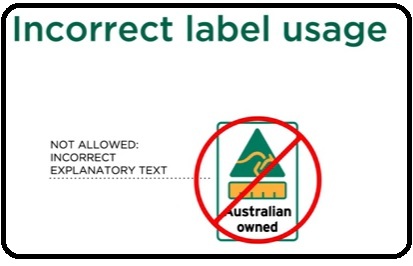
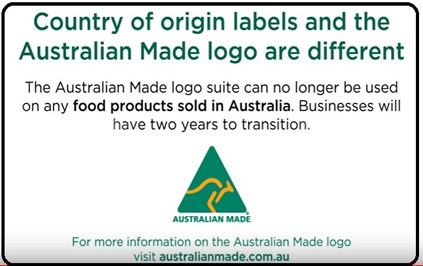
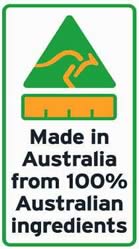
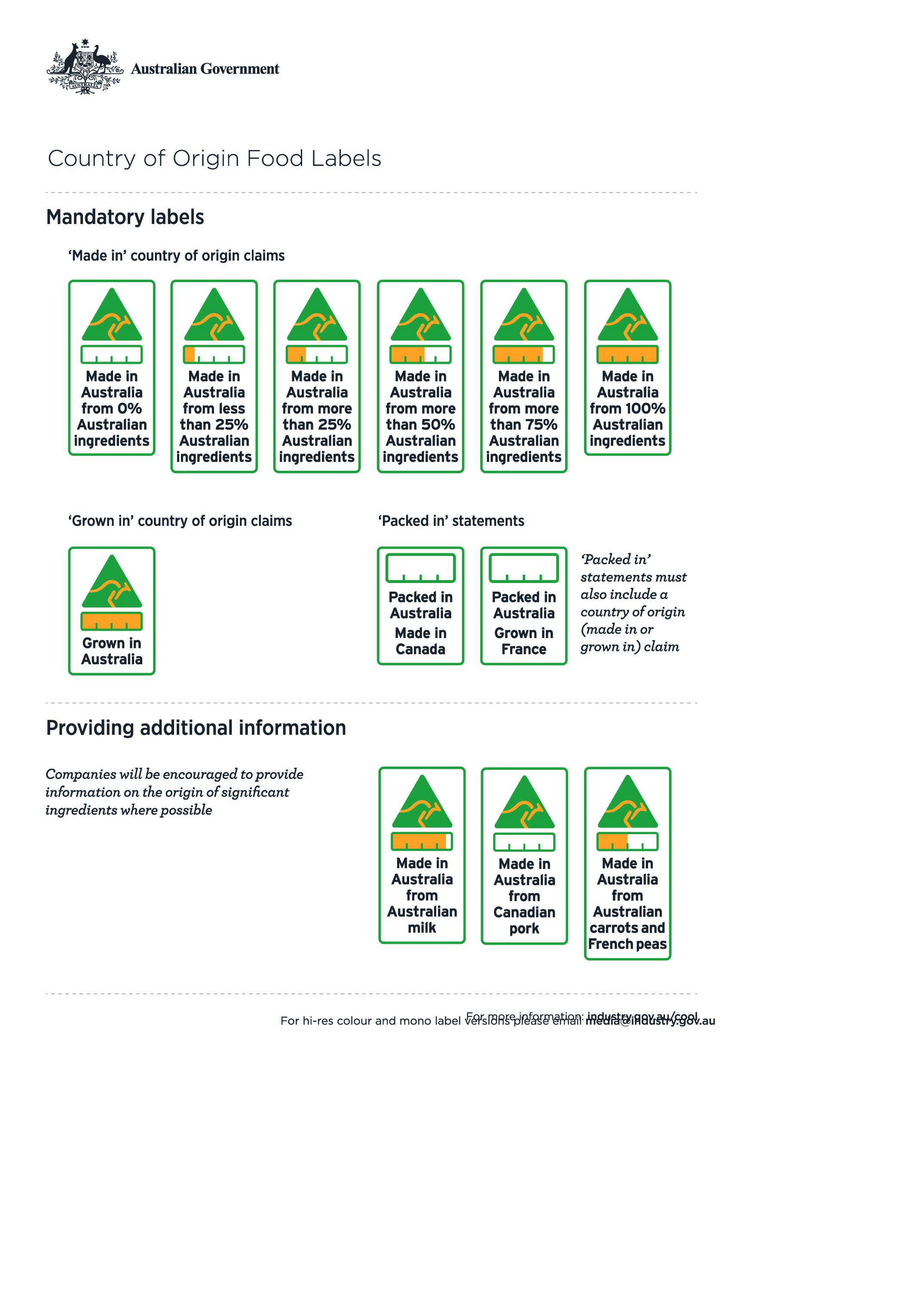
- New food labelling system
- New formula series
- Products Infromation
- Customer feed back
About us
Corporate information, location and contact details
License & Related Document
- Certificate of food Business Reg.
- Australian only Growing License
- Permit for production
- Spirulina as food (not medicine)
- Trading mark Register
- 20 years Australian Growing Patent
- Certificate of Original ( Aus)
Spirulina Analysis Reports
Honor and Awards
- Ausindustry NT News (report)
- NT Local News paper report 1
- NT Local News paper report 2
- Austrade Export successful story
- Year 2003 NT Export award winner
- Year 2003 Australian Export award National final list
- Greeting letter from Minister
- Greeting Letter from NT Minister
- 2003 Aus. Export award case study
- 2003 Aus. Export award reports.
- 2004 Jun Austrade trade mark
- 2006 Diary of Australia ( Dec. 06) by Australian Government
2006 Australian Export Awards
- 2006 Australia NT Export Award
Agibusiness Award Winner - 2006 Australia NT Export Award
Manufacters Industry Award winner - 2006 Australian Export Award National final list
- 2006 Nov. Greeting Letter from
NT Chief Minister Hon Clare Martin - 2006 Nov. Greeting Letter from
Ministrer for Trade Hon Warren Truss - 2006 Oct. Greeting Letter from
Minister for Indusry, Tourism & Res.
The Hon Ian Macfarlane
Downloads
Product brochures and reference material
- English Brochure | 86k PDF
- Chinese Brochure | 234k PDF
- Japanese Brochure | 106K PDF
- Spirulina E-Book | 667K PDF
Free download "Spirulina ebook"
by Harald W. Tietze 4th edition (Value at AU$ 15)
Hard copy avaiable now